
The Shift's
Origin Story
(Use Coupon Code "FRAZIER" for a 10% discount)
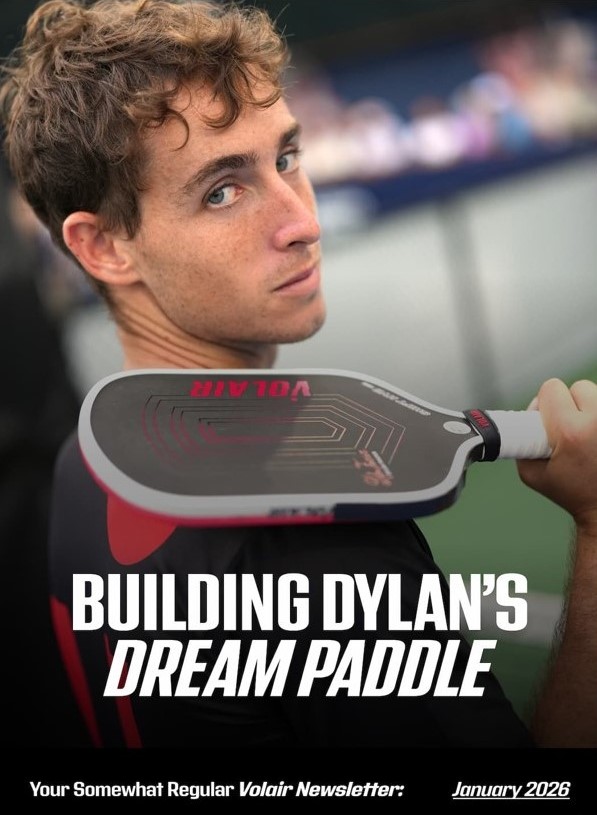
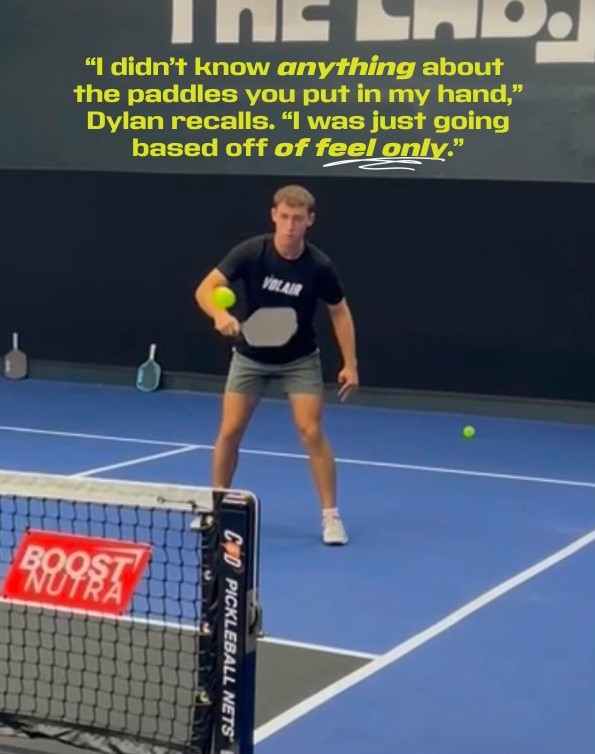
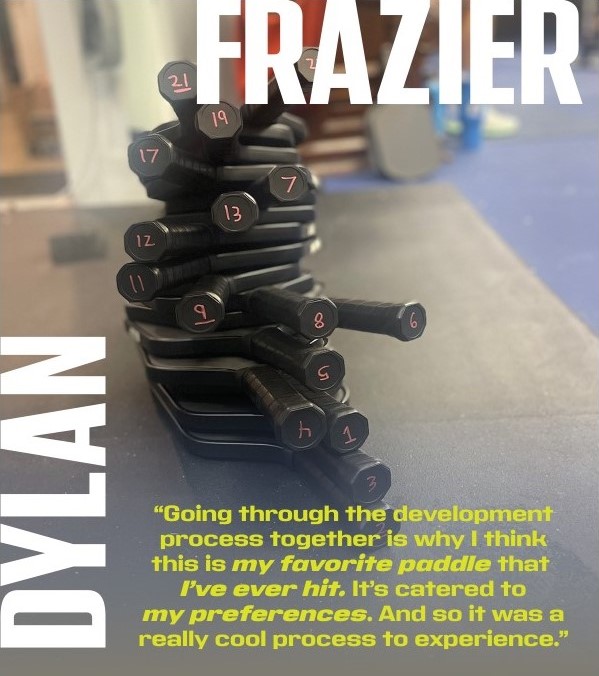
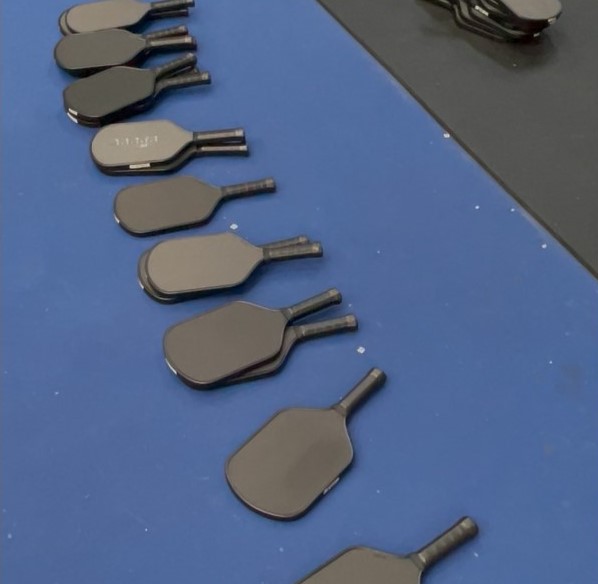
We brought 30 paddles to our first testing session with Dylan Frazier. All were different prototypes, each with subtle variations in construction, face materials, and tech. When we call Dylan to do our first testing session with Justin Barton, who helped lead the development of the Shift, he cycled through them quickly. Forehands, backhands, resets, counters.
Some he quickly dismissed. Others lingered in his hands just a moment longer before throwing them in the discard pile. We watched, took notes, and tried to spot any patterns we could find.
Dylan didn't ask about specs or materials and was testing them blind. He was trusting his hands to tell him what his mind couldn't articulate yet. Our job became mostly about translating Dylan's feel preferences and reverse-engineering them into the right paddle specs.
It would take 60 prototypes and nine months before we figured it out.
WHY MAKING THE SHIFT FOR DYLAN
WAS SO SPECIAL
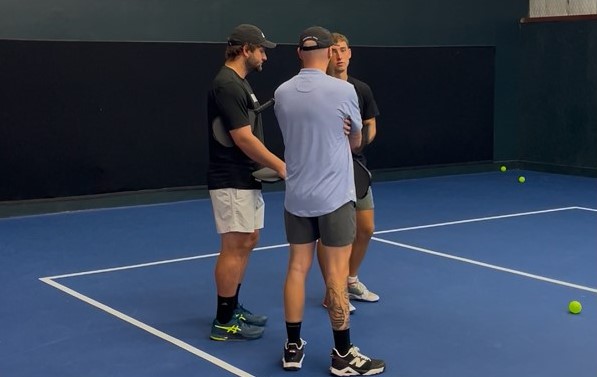
When reviewers started talking about the Shift, we noticed that they've been glossing over the fact that this is a top 10 pro's signature paddle. We think they're used to these other companies just releasing a paddle and slapping somebody's name on it, whether or not that pro had a hand in it all all.
Most "signature" paddles are essentially marketing collabs. A pro gets to sign their name on an existing paddle, maybe picks a color, does a photo shoot...
We wanted to get Dylan as involved as possible. So we got him to test 60 prototypes across nine months and he had a big say in all our engineering decisions. If he wasn't happy with it, we weren't going to go through with it.
DYLAN'S UNIQUE APPROACH TO
TESTING PADDLES
Justin noticed something immediately about how Dylan approached testing.
"Whenever Dylan was testing these paddles, he was prioritizing playing in the mid court and hitting resets a lot," Justin recalls. "That was a big part of it. And then another part of it was countering and just the maneuverability, which makes sense for the pro game."
We'd seen other pros test paddles before. They usually want to crush drives, test their serves, see how much power they can generate. Dylan did the opposite.
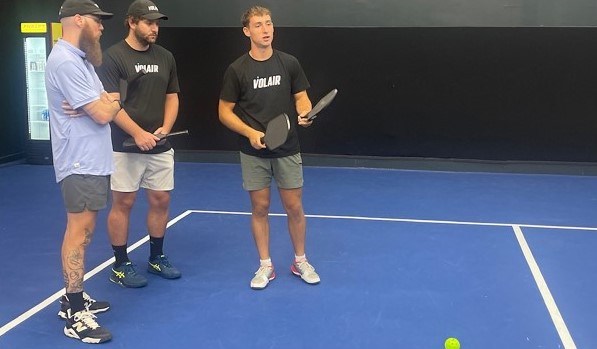
When Justin asked if he wanted to test serves or drives with the narrowed-down options, Dylan's response caught us off guard. "Not really. If I can control it, if I can reset with it, and if I have good counters with it, I'm not worried about a serve or drive."
If the paddle could handle the most difficult scenarios - pinned in mid court, forced to reset - then it would excel in easier situations like serves or drives where Dylan had more time and space. We were learning that Dylan's approach to testing reflected his approach to pickleball, which turned out to be very methodical, focused on consistency, and prioritizing control in difficult situations over power.
SO WE LISTENED AND BUILT A DWELLY,
SPINNY, AND MANEUVERABLE PADDLE
"We went through multiple variations to get to the point where we were designing a paddle that hit the maximum legal deflection to still be certified," Justin explained.
When the ball strikes the paddle face, the surface deflects slightly, creating what players call "dwell time" or "pocketing" - the ball sits on the face fractionally longer, giving players more control over placement and spin. Both USAP and the UPA-A regulate how much deflection is allowed.
We designed the Shift to live right at the very cusp of passing.
But getting there required iteration. After that first 30-paddle session, we went back to the drawing board. Made another 30 paddles. Tested again. The process stretched across nine months - not to make just one paddle, but to build a system we could continue to refine.
The system centers on an internal channel design in the core that we can adjust with different locations and different depths, to dial in specific performance characteristics. We're thinking of the Shift as a platform, not just a one-off paddle.
FOR HIS GAME
THE SHIFT GAVE DYLAN A NEW SHOT
"I play a balanced, more classic pickleball," is how Dylan describes his natural style. "I favor getting to the kitchen line and playing out long, grindy dink rallies, resetting from the kitchen line as opposed to the super aggressive style of play. I like the touchy feel shots, the soft game a lot. And then I'm waiting to counter."
But the paddle pushed him to experiment with new shots.
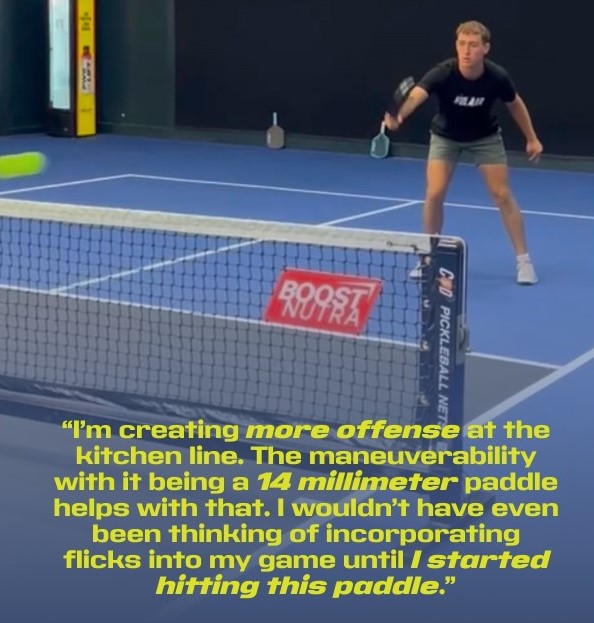
"One thing I like about this paddle a lot is that it's got a lot of spin," Dylan told us. "So I'm actually starting to incorporate more top spinning drops and even serves into my game, which is setting me up better early on in the point."
The 14mm thickness opened up possibilities he hadn't been exploring.
WHY DOES DYLAN USE THE HYBRID?
We offered Dylan three shapes: our wide body, an updated hybrid shape, and an entirely new elongated shape. He tested all three extensively before making his choice.
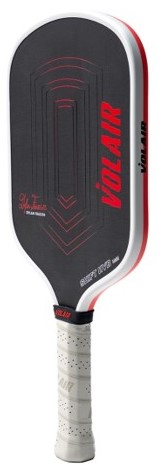
For Dylan, the hybrid represented the middle ground that matched his balanced approach. It features a longer handle and a thinner throat section compared to the previous V1.F paddles - details that proved more important than we initially expected.
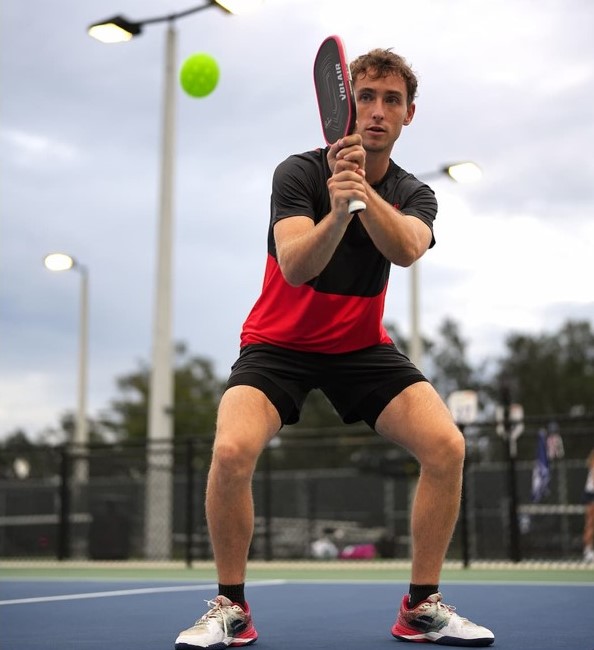
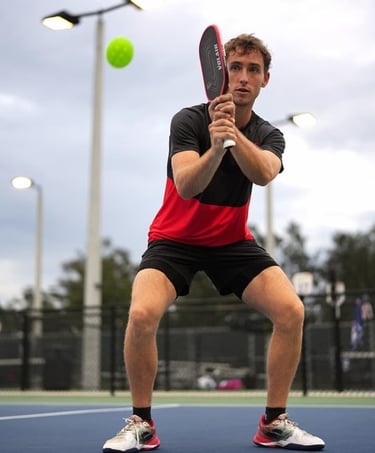
"Right when I picked it up, I felt like it fit my second hand for the two-handed backhand shot, which a lot of players, myself included, are starting to add to their game," Dylan says. "It's becoming a crucial part of the game."
Justin explains the engineering behind the updated shapes, "The section where the handle radiuses into the face is really important because it's right in the crook of your fingers almost. And if it's too chunky there, it can be uncomfortable."
THE TWO-TONED EDGE GUARDS WERE
AN ENGINEERING CHALLENGE
Our founder Ryan noticed Dylan constantly spins his paddle, so the split-color edge guard idea kept coming back. "I just thought it would be a really cool visual with him spinning it," Ryan says.
Getting the factory to produce a molded two-color edge guard - not painted, which would chip - met with months of resistance. "Sometimes you have to be the annoying guy who's asking until you finally get them to at least try it."
The split edge guard became one of the paddle's most distinctive features.
"I know there are some players that are particular about making sure they use the same side of the paddle," Dylan notes. "Anytime they hit a forehand, they want it to be this side. Well, there you go. Now it's super easy."
WE LISTENED
Dylan doesn't come from a tennis background, and neither do most pickleball players. So we designed the Shift for pure pickleball shots - resets, counters, and mid-court control that don't exist in tennis. Nine months and 60 prototypes later, we learned the best thing you can do is put paddles in a pro's hands and actually listen.